Intelligent Lighting Redefines Human–Machine Interaction
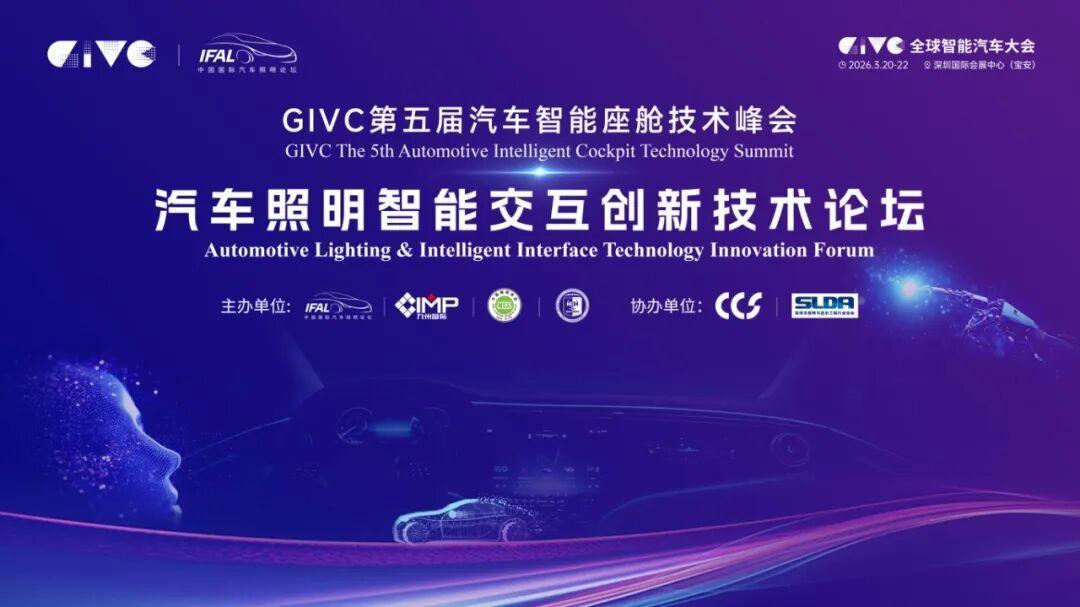
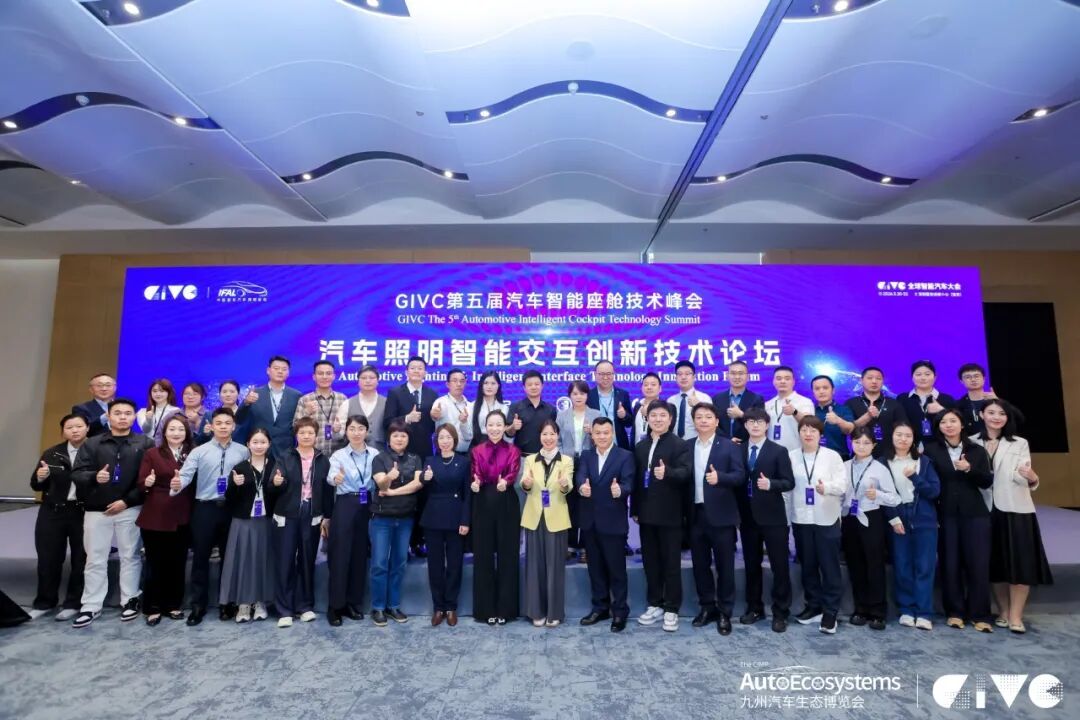
The 5th Automotive Intelligent Cockpit Technology Summit 2026, a concurrent event of the 2026 Global Intelligent Vehicle Conference & Fair, successfully concluded at the Shenzhen World Exhibition & Convention Center, China on March 21, 2026.
At a pivotal stage in the advancement of the intelligent connected vehicle industry, the forum was held under the theme “Innovation in Intelligent Automotive Lighting Interaction.” It brought together leading experts from academia, leading OEMs and key supply chain enterprises to explore the strategic evolution of automotive lighting technology from basic functional illumination to advanced emotional interaction. The forum presented a forward-looking vision for the integration of intelligent automotive lighting and human-machine interaction driven by artificial intelligence, delivering valuable industry insights for the development of the next-generation intelligent mobility ecosystem.
From Functional Illumination to Intuitive Interaction

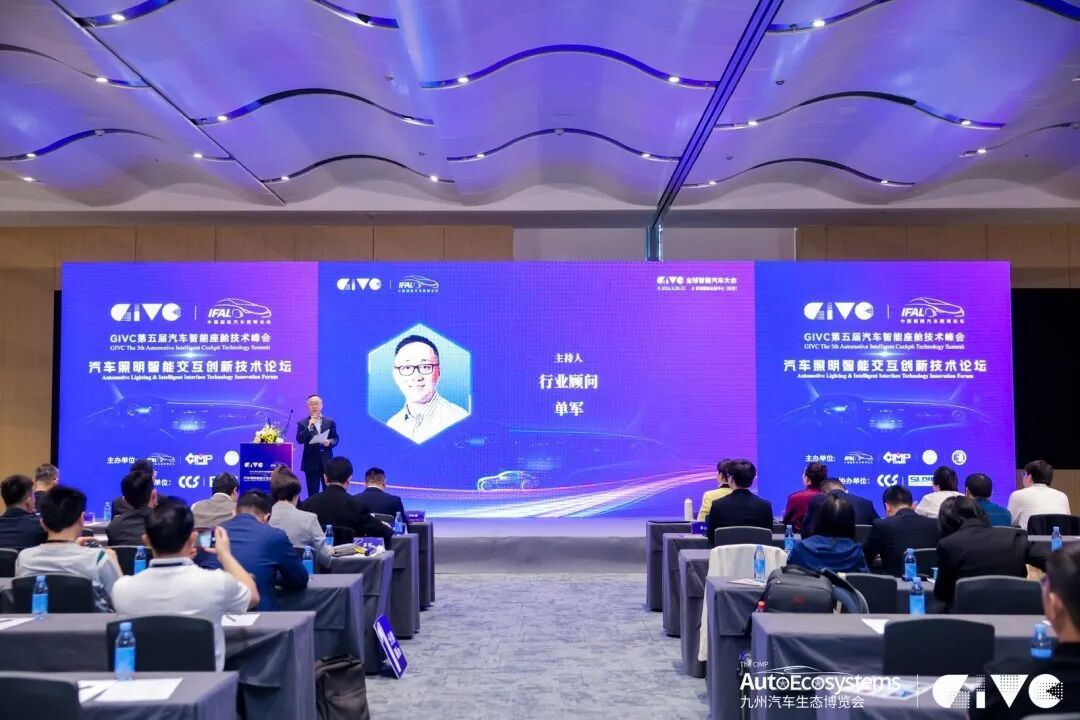
At the opening of the summit, Professor Lin Yandan from the Institute of Intelligent Robotics and Advanced Manufacturing Innovation, Fudan University, Zeng Xiaolan, President of the Shenzhen Lighting and Display Engineering Industry Association (SLDA), and Liu Yongfu, Manager of the Vehicle Lighting Project at CIMP, delivered the opening remarks.
Professor Lin Yandan opened the discussion by stating that intelligent cockpit lighting has entered a more advanced stage of development. She emphasized that the industry should lead the latest wave of technological innovation, leveraging breakthroughs such as Micro LED and adaptive projection to enable deeper integration between intelligent algorithms and optical design. This will expand new dimensions of human-machine interaction.
In this process, automotive lighting is evolving into one of the most human-centered communication channels between the vehicle and its occupants. It is driving design to move from passive safety toward proactive care, replacing simple functional indicators with more refined emotion-aware interaction.
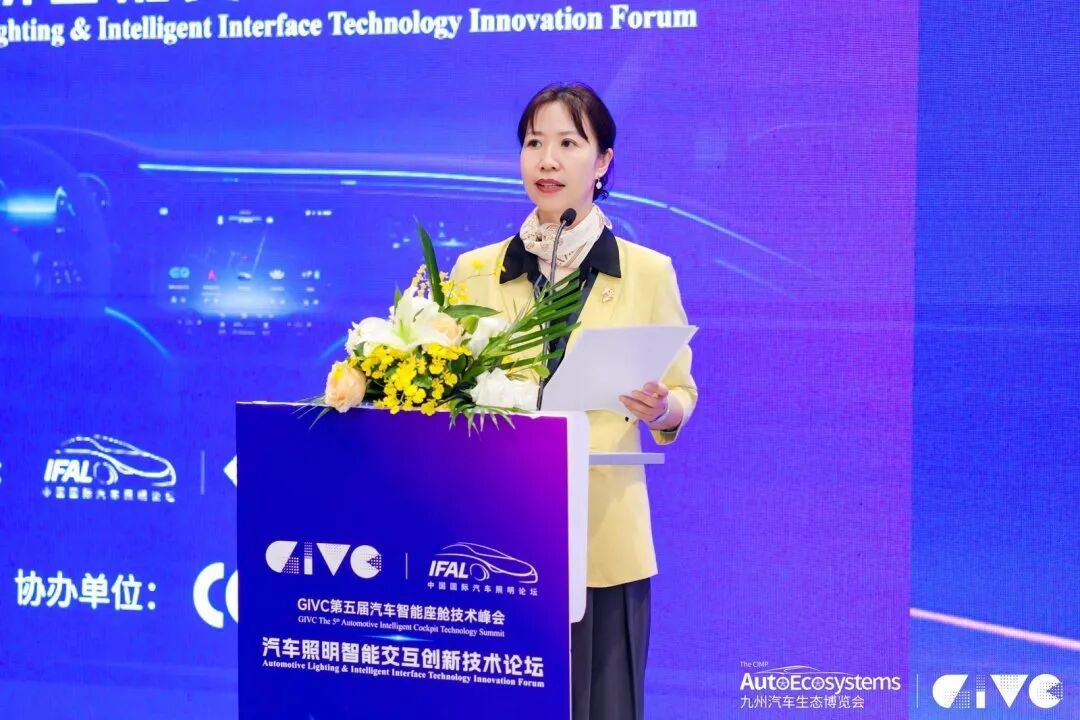

Professor Lin Yandan
President Zeng Xiaolan pointed out that the essence of the transformation in automotive lighting lies in the deep integration of traditional manufacturing, display interaction technologies and emerging vehicle application scenarios. She called on the industry to break down existing barriers, build a solid foundation based on automotive-grade safety, use display technology as a common language, and position intelligent vehicles as the core platform.
Through close collaboration among these three domains, the industry can jointly build an open and interconnected ecosystem, accelerating the implementation of frontier innovations. In the future, automotive lighting will move beyond basic functions and become a key interface for human-vehicle interaction, driving the automotive industry steadily toward a smarter, safer and more experience-driven future.
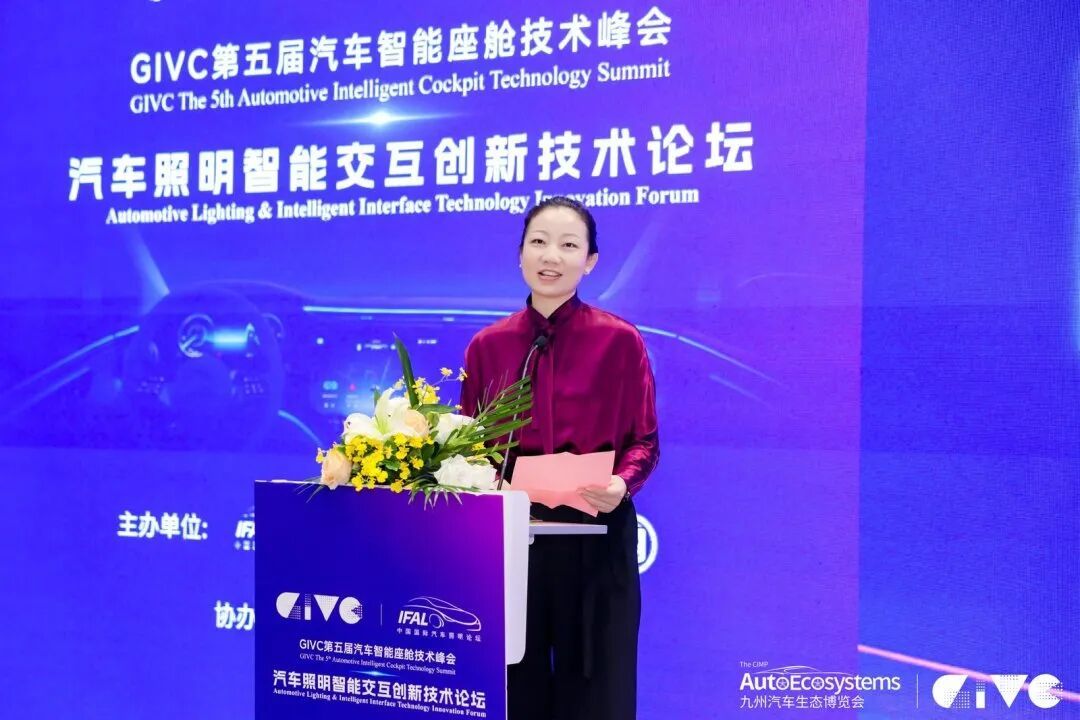
President Zeng Xiaolan
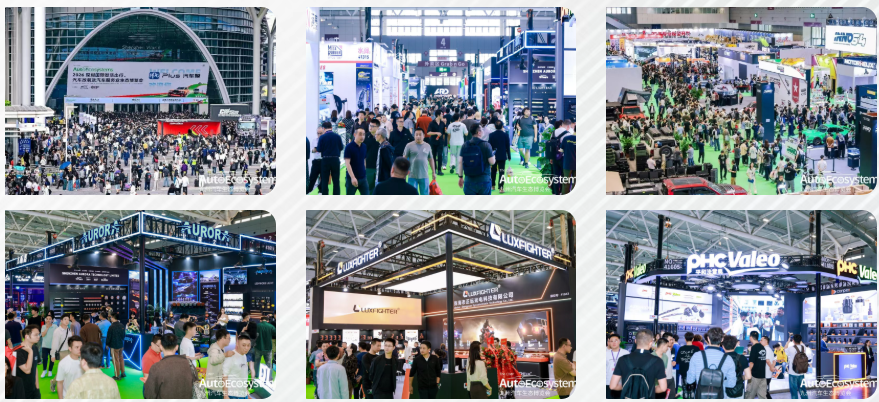
Liu Yongfu, Manager of the Vehicle Lighting Project at CIMP, reviewed the solid achievements of this year’s exhibition in the conclusion. He noted that the 2026 CIMP AutoEcosystems Expo brought together more than 7,000 global automotive value chain enterprises across an expansive exhibition area of 600,000 square meters, attracting over 100,000 visits on the opening day.
He highlighted the strong participation of 120 mainstream carmakers, covering a wide spectrum from luxury brands to leading new energy vehicle manufacturers, with nearly 20,000 new products launched at the show.
He emphasized that the forum serves as a key bridge for promoting in-depth dialogue between industry supply and market demand at scale. It supports the practical evolution of technology from being merely functional to becoming more intuitive and user-aware, while providing a solid platform for collaborative advancement across the automotive ecosystem.
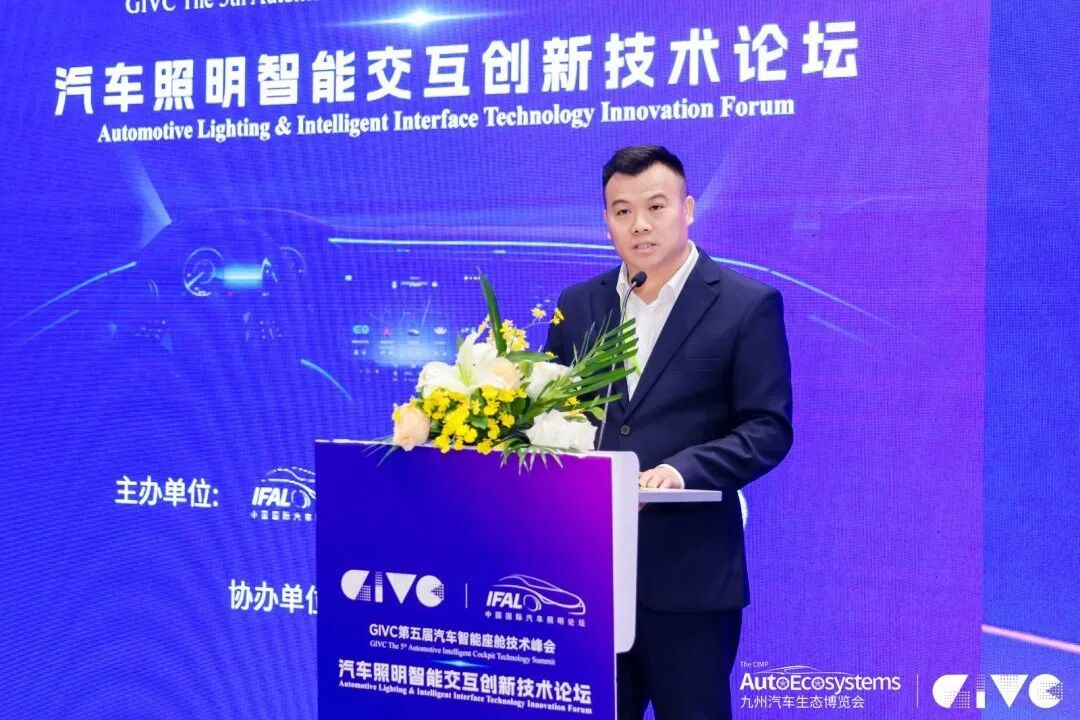
Liu Yongfu
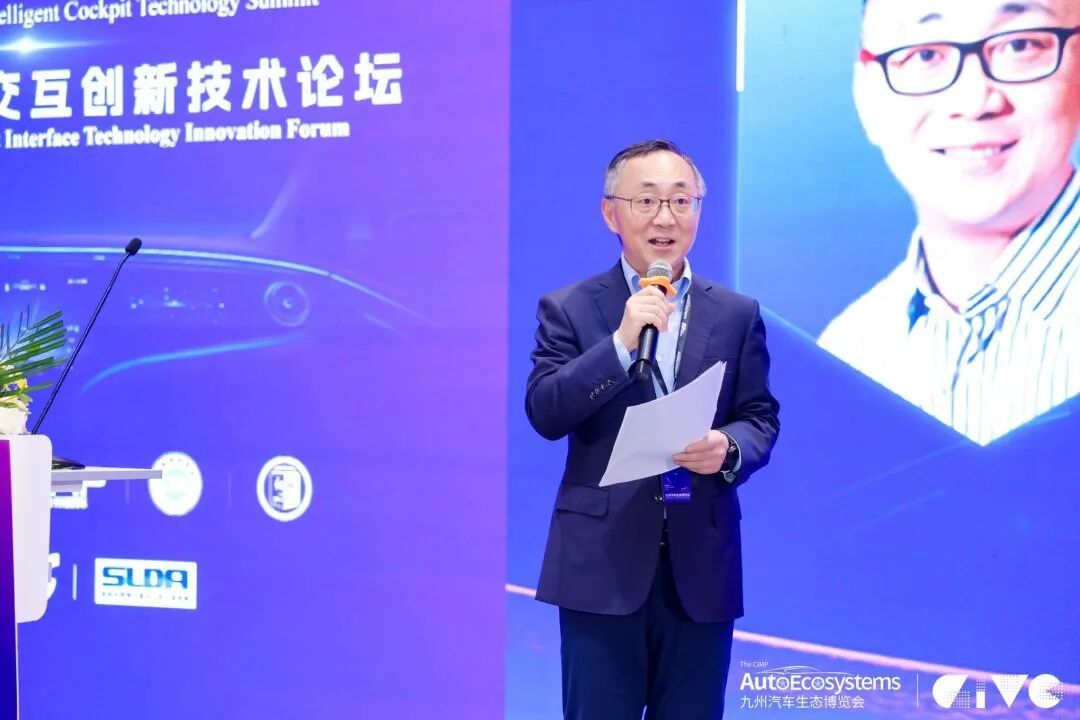
The forum was hosted by industry consultant Mr. Shan Jun.
Human Factors as the Foundation, Quantifying User Experience
Safety is the baseline of intelligent lighting, while user experience is the ultimate measure of value.

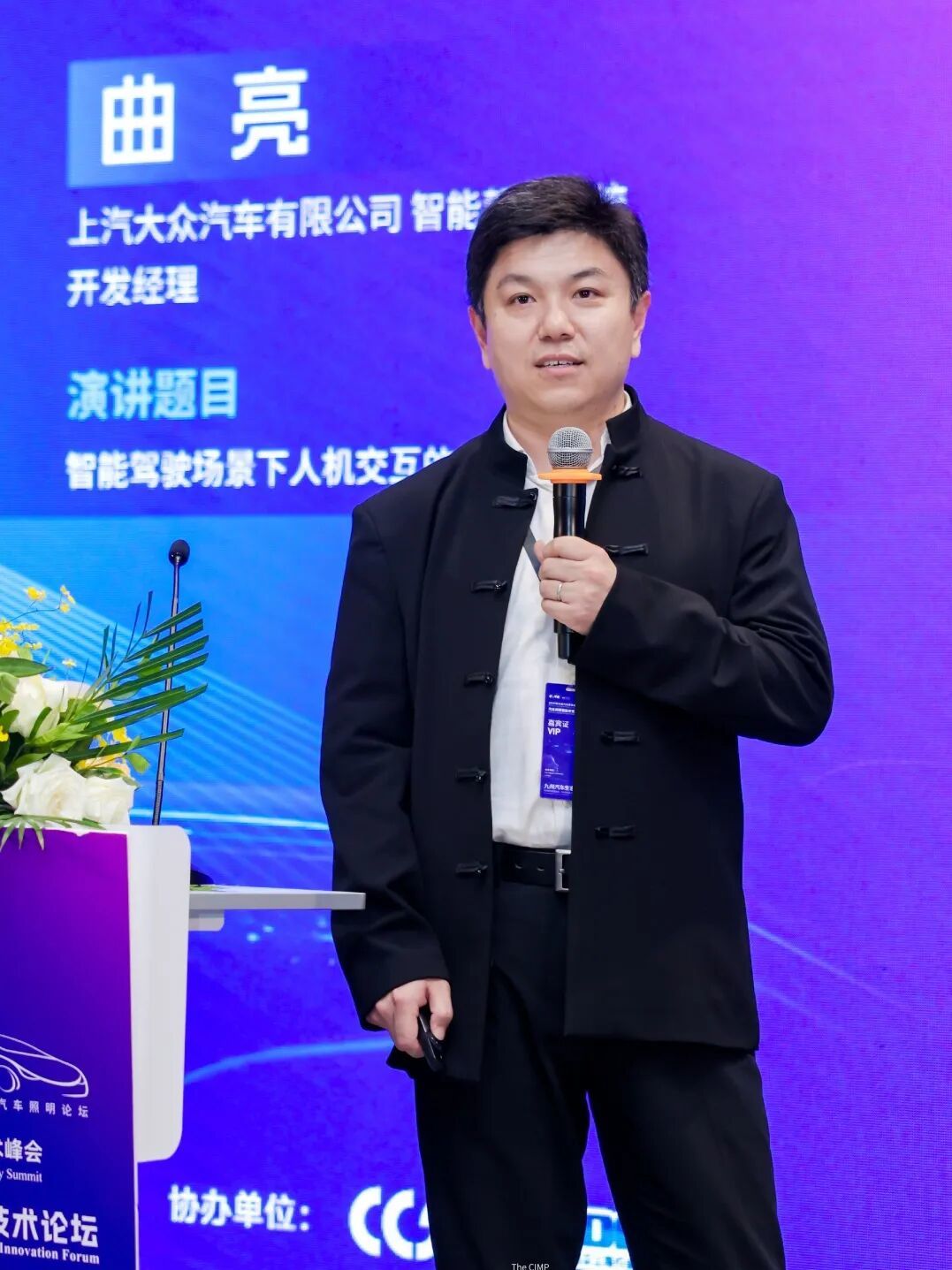
Qu Liang, Intelligent Driving System Development Manager at SAIC Volkswagen, directly addressed the pain points of the “takeover paradox” and “cognitive load” in in-cabin interaction, and proposed a human-factors-based “golden triangle” principle: safety first, trust building and seamless interaction. He emphasized that lighting, as a non-intrusive interaction modality, plays an irreplaceable role in conveying system status through lighting language, reducing driver cognitive load and calibrating human-machine trust.
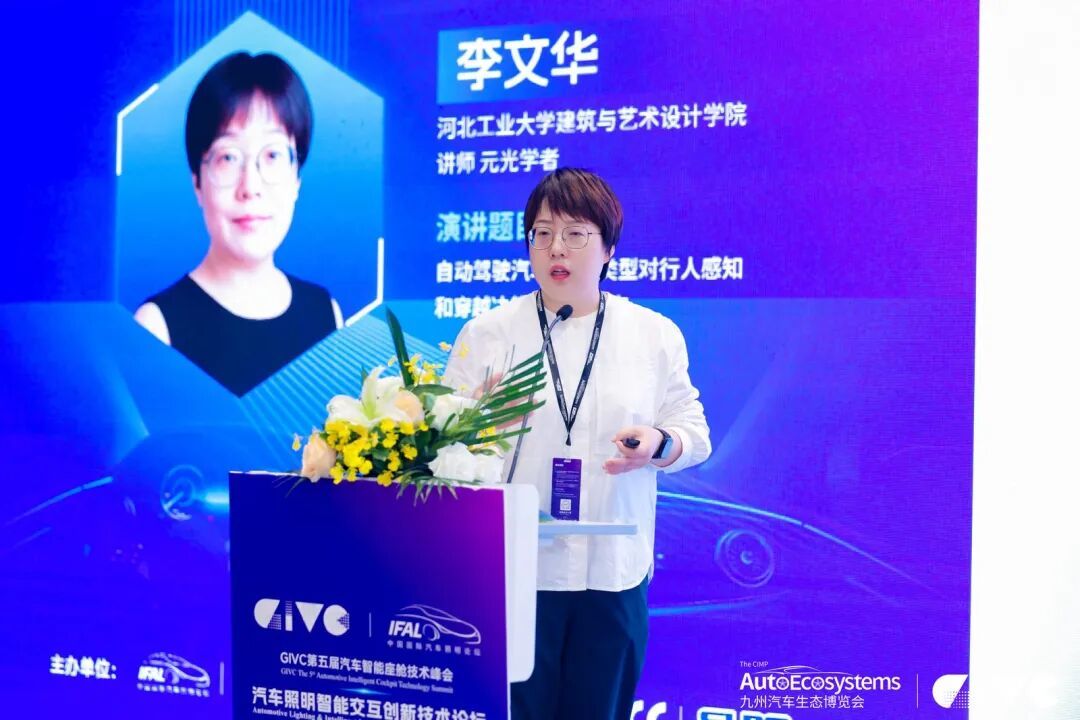
Dr. Li Wenhua from Hebei University of Technology presented empirical research on external interaction in autonomous driving eHMI scenarios. His study confirmed that icon-based signals combined with adaptive flashing strategies significantly reduce pedestrian cognitive load and improve crossing decisions, providing a solid scientific basis for the design of external lighting interaction.
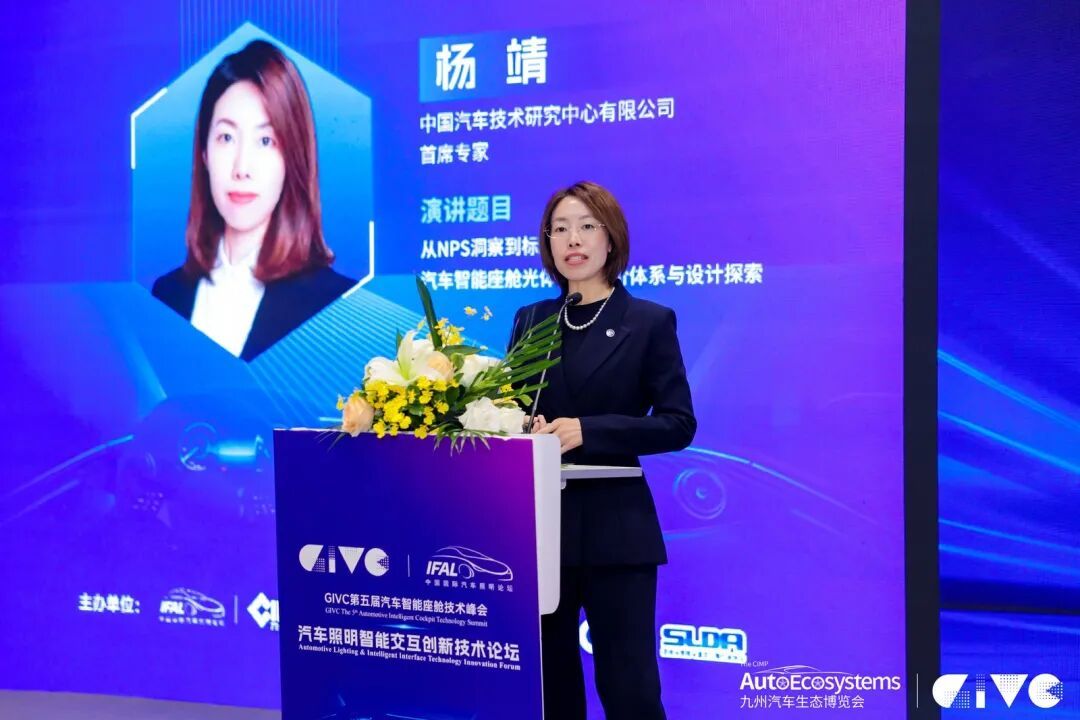
Yang Jing, Chief Expert at China Automotive Technology and Research Center Co., Ltd., focused on building a closed-loop framework for experience quantification. She advocated a development pathway from NPS-based user insights to standard-led industry guidance. She proposed converting subjective perceptions of the lighting environment into objective evaluation indicators, using these indicators to inform design and support the development of industry standards. This approach addresses the industry challenge of “meeting technical parameters while falling short in user experience,” ensuring that lighting experience is both compliant and premium.
AI-Powered Intent Understanding
AI foundation models and scenario engines are reshaping the “brain” of automotive lighting, enabling it to understand user intent and generate content.
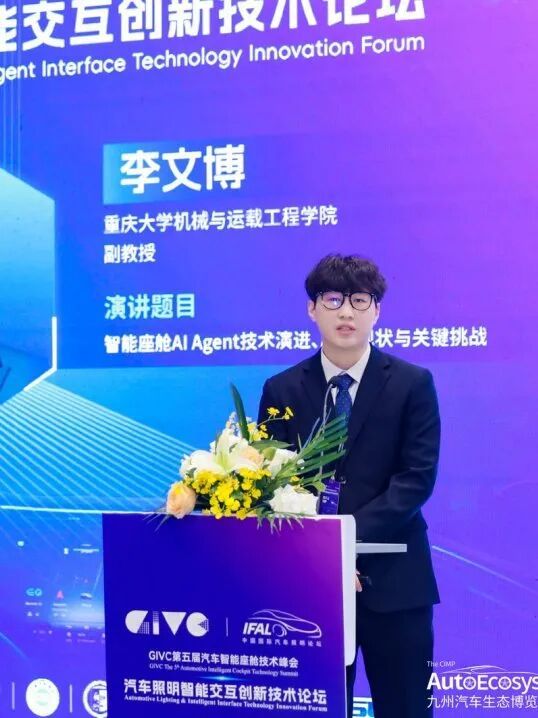
Dr. Li Xinyuan from the team of Associate Professor Li Wenbo at Chongqing University shared the evolution pathway of AI Agents in intelligent cockpits. She emphasized that future automotive lighting control will be integrated into the decision-making core of AI foundation models, enabling a qualitative shift from mechanical “command execution” to deeper “intent understanding,” allowing lighting systems to proactively adapt to user needs.
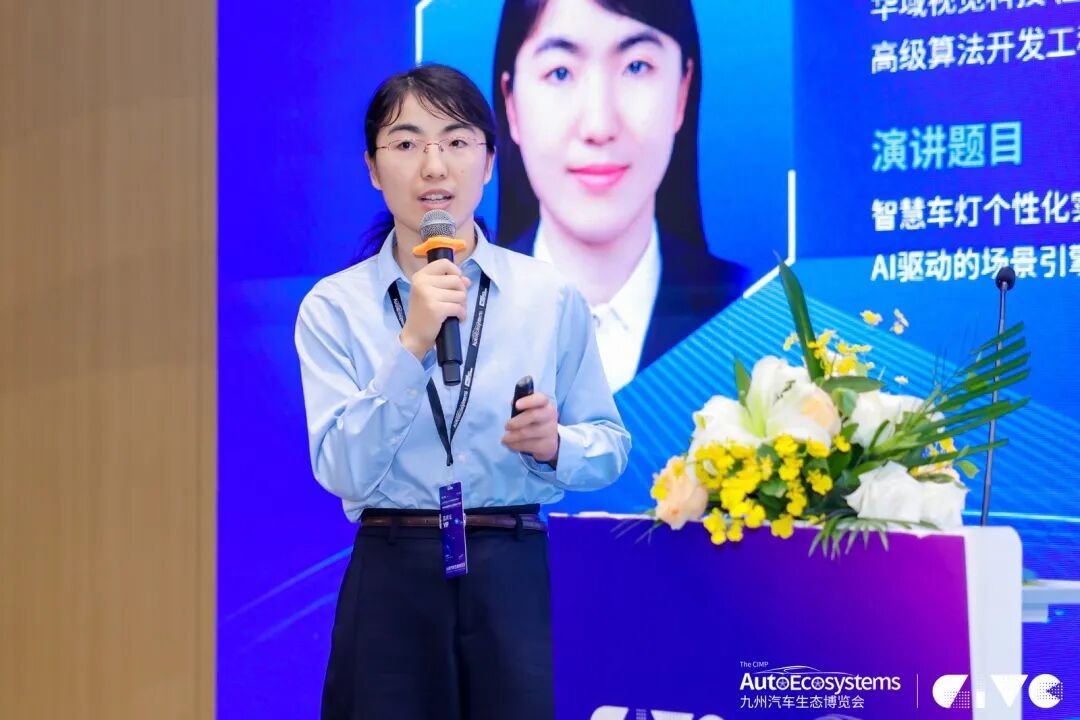
Building on this direction, Jia Shuman from the Software Sub-Center of HASCO Vision Technology presented an AI-driven scenario engine. This technology frees automotive lighting from the limitations of preset scripts, enabling lighting systems to generate dynamic ambient experiences in real time based on weather conditions, road scenarios and even user emotions. It realizes highly personalized expression across different use cases, from welcome lighting experiences to ground-projection games.
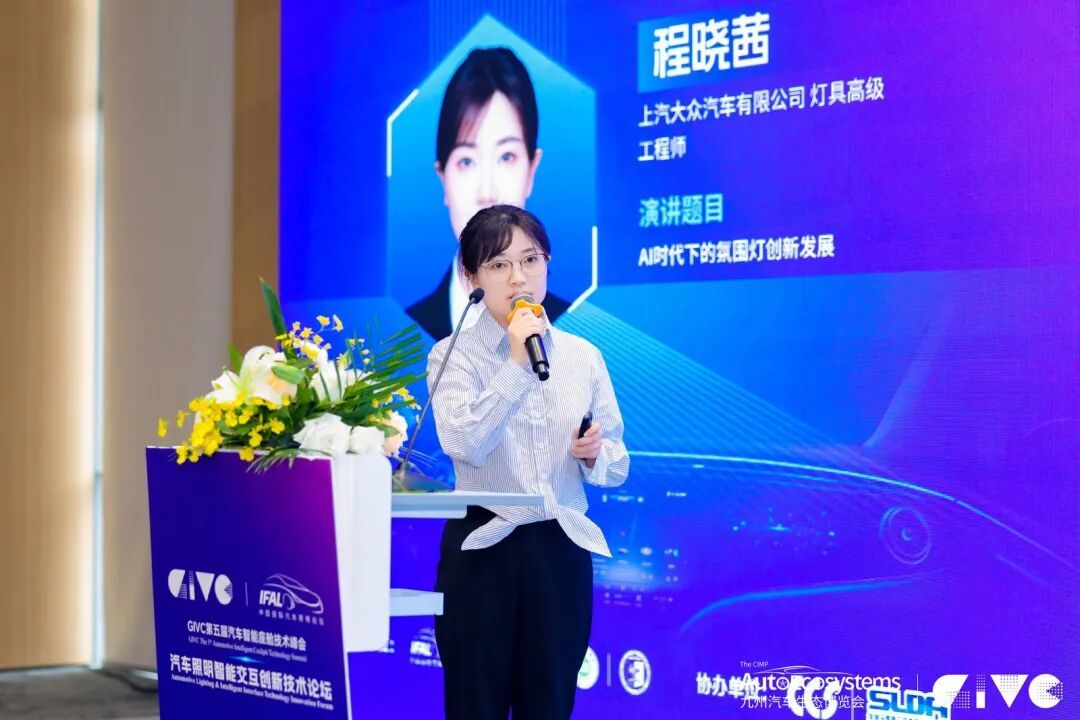
At the same time, Cheng Xiaoqian from the Ambient Lighting Team of SAIC Volkswagen further explored the innovation direction of ambient lighting in the AI era. She emphasized that light, as an environmental modality, should feature seamless interaction. While creating an aesthetic atmosphere, it can also convey key information through subtle changes such as breathing light language, calibrating human-machine trust without disturbing the driver.
Decoupling Software and Hardware to Drive Display Innovation
The decoupling of foundational hardware and breakthroughs in new display technologies provide a solid basis for higher-level interaction.
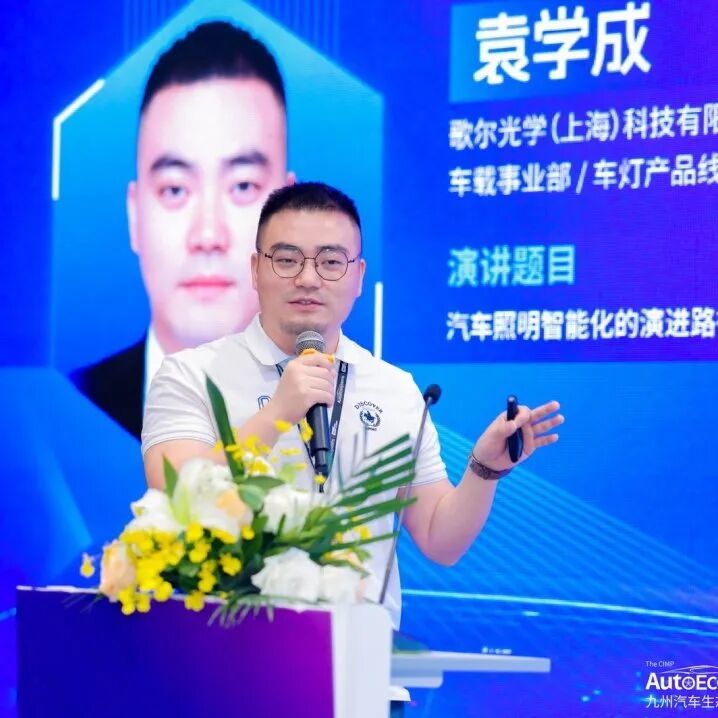
Yuan Xuecheng, Director of the Automotive Lighting Product Line at Goertek Optical Technology, analyzed the evolution pathway of intelligent automotive lighting and pointed out that the key to restructuring the industry ecosystem lies in software-hardware decoupling. This shift will drive automotive lighting to evolve from a single-function component into an intelligent terminal.
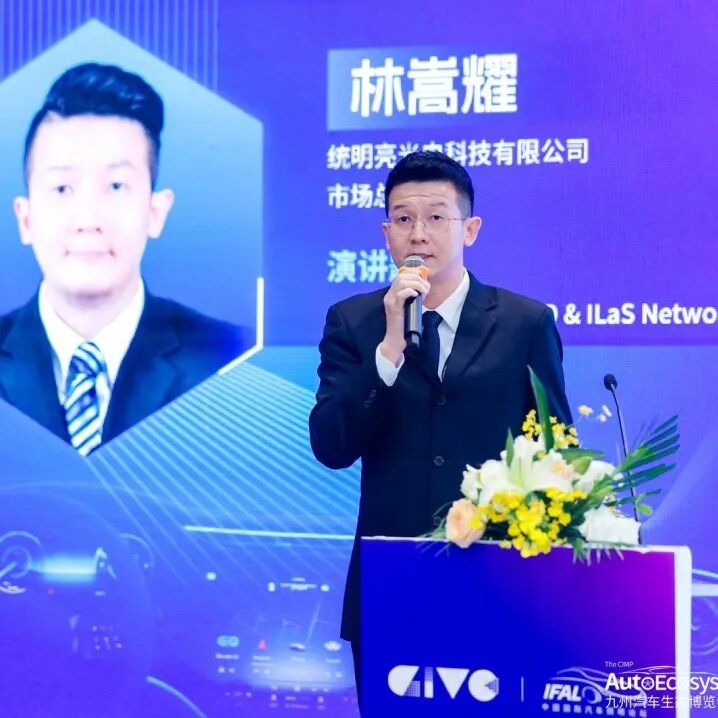
To enable the practical implementation of software-defined vehicle lighting, Lim Yong Yiaw, Marketing Director at DOMINANT Opto Technologies, presented the seddLED and LiAS network architecture. The solution enables pixel-level precise lighting control through high-speed Ethernet and supports OTA upgrades, providing a flexible hardware foundation for dynamic interaction.
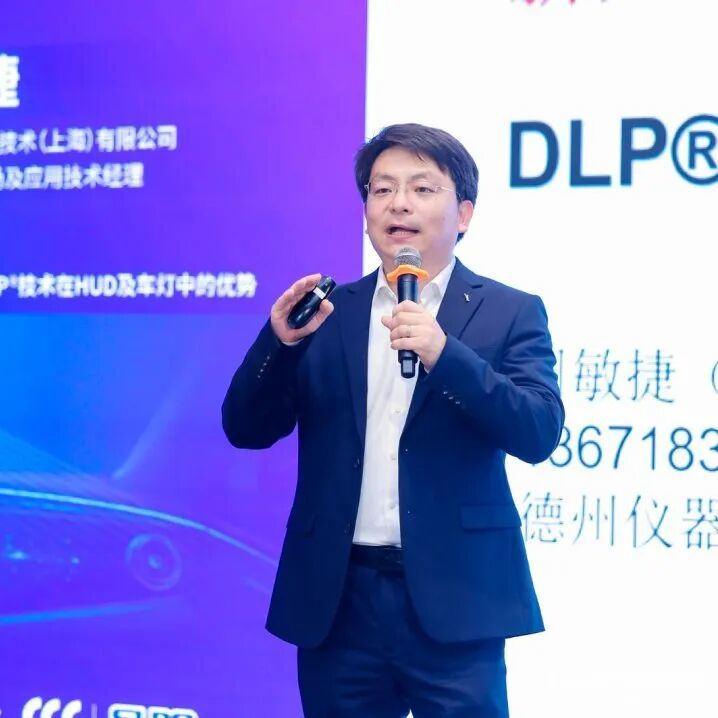
At the forefront of display technology, Zhou Minjie, Applications Engineering Manager for China at Texas Instruments, provided an in-depth interpretation of the advantages of DLP technology under the new national standard. The data showed that DLP significantly exceeds the standard requirements in key performance indicators such as sunlight resistance, brightness and contrast, making it a preferred technology for high-precision interaction in AR-HUDs and megapixel headlamps.
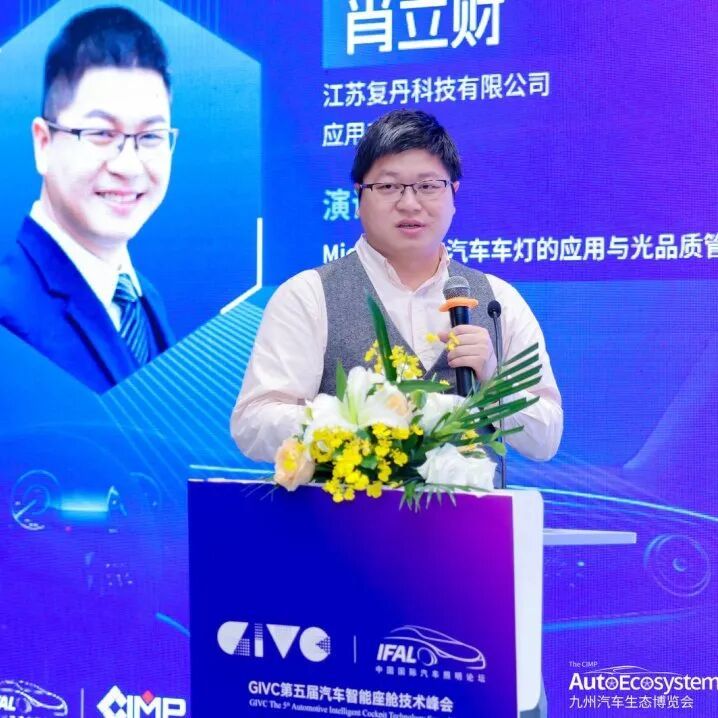
Addressing the mass production challenges of Micro LED, Xiao Licai, Senior Optical Engineer at Jiangsu Fudan, proposed an end-to-end solution covering yield improvement in mass transfer and chromaticity consistency control. By leveraging digital twins and automated inspection, the solution accelerates the commercialization of Micro LED technology.
Simulation-Driven Acceleration and Closed-Loop Validation
Advanced simulation and testing tools are significantly shortening development cycles and ensuring the high-quality products delivery.
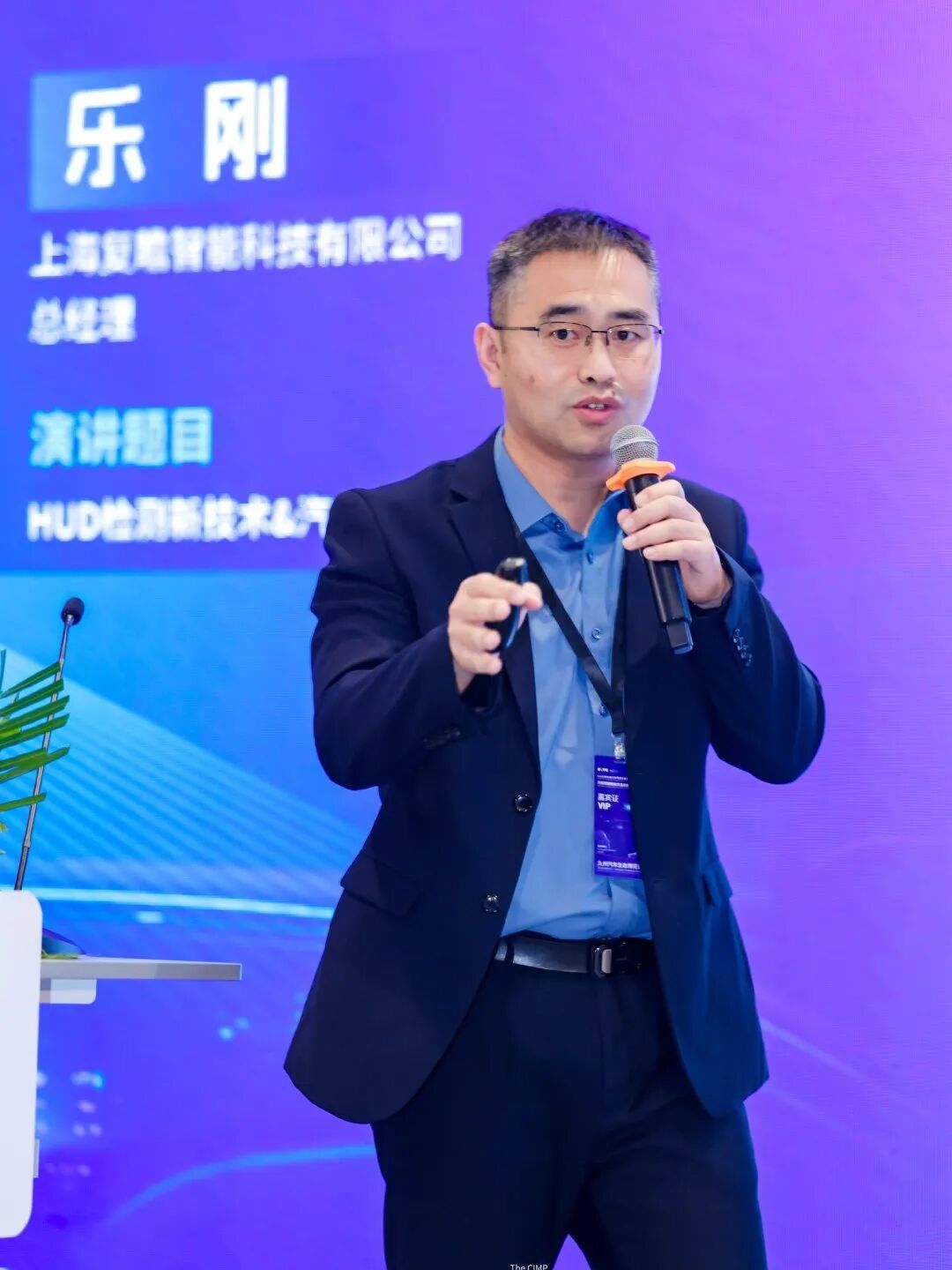
Le Gang, General Manager of Shanghai Fuzhan, addressed the adaptation challenges in the aftermarket and multi-model mixed-line production by presenting a highly flexible HUD testing solution, which effectively solves the difficulties of adapting to multiple vehicle models.
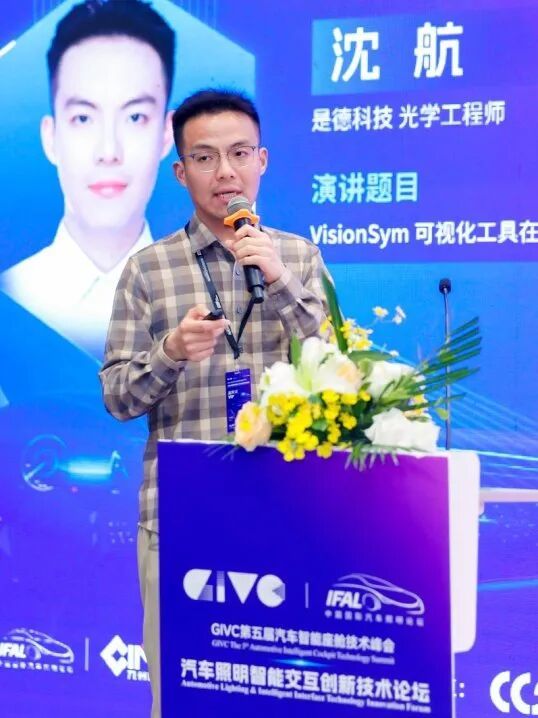
In the design validation stage, Shen Hang, Application Engineer at Keysight Technologies, introduced the VisionSym visualization tool. The tool enables a seamless closed loop from optical design to physics-based photorealistic rendering, successfully reducing the prototype validation cycle from several months to a matter of minutes. This significantly improves the industry’s efficiency in innovation and iterative development.
Conference Summary
The summit marked a clear industry consensus in the automotive lighting sector: future competition will no longer be defined by the accumulation of individual technical parameters, but by the integrated capabilities of AI algorithms, new display technologies, human factors engineering and standards systems.
From safety validation to standard-led development, from intent understanding to scenario generation, and from breakthroughs in hardware architecture to the efficiency gains enabled by advanced R&D and testing, the industry is working together to drive the evolution of automotive lighting from a tool that “illuminates the road” into an intelligent companion that “understands user intent.”

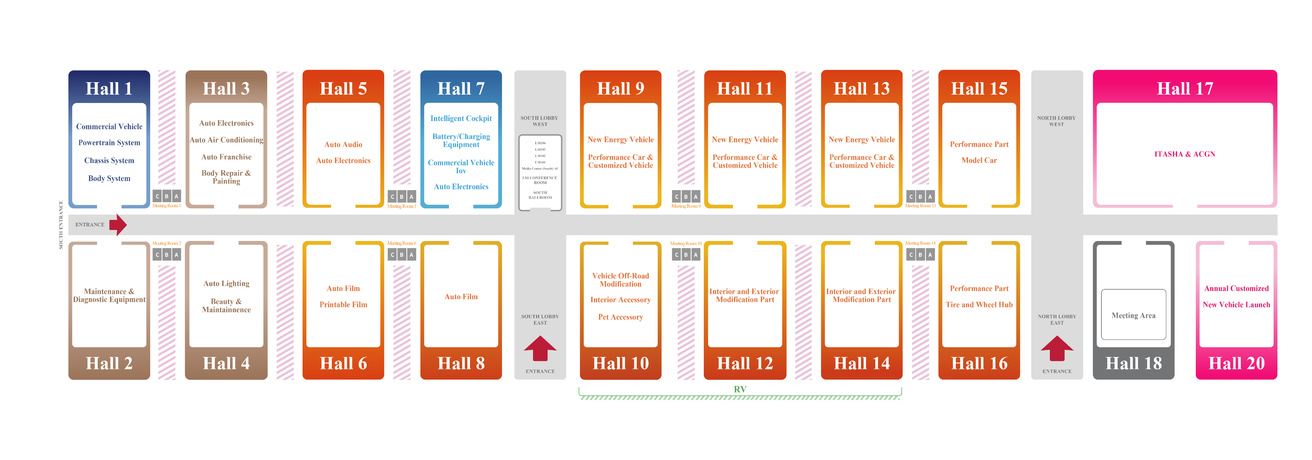
The CIMP AutoEcosystems Expo, established in 2006, has become a leading automotive industry ecosystem trade platform in Asia. With 26 successful editions to date, the expo stands as the world’s first full-industry-chain B2B2C automotive ecosystem exhibition and trade platform, connecting OEMs, suppliers, auto parts companies, aftermarket service providers, modification brands, technology companies, and consumers. Positioned around "Technology, Fashion, and Trade" the expo covers both passenger and commercial vehicle markets, with a focus on global vehicle release, auto technology, auto modification, auto aftermarket, and auto culture. It builds a comprehensive ecosystem integrating product showcases, sourcing and trade, trend releases, industry networking, and cultural experiences. The 2027 edition will reach a total scale of 600,000 square meters, bringing together 120 carmakers and 7,000 companies across the automotive industry. It is expected to welcome more than 500,000 domestic buyers and 20,000 international buyers for product procurement, creating unmatched business opportunities across the entire automotive supply chain. More than 80 international summits and events will be held concurrently. As an annual benchmark for the global automotive industry, the CIMP AutoEcosystems Expo is not only a vital platform for sourcing new products and identifying emerging trends, but also a key driver of innovation, ecosystem integration, and automotive culture development.
Follow US