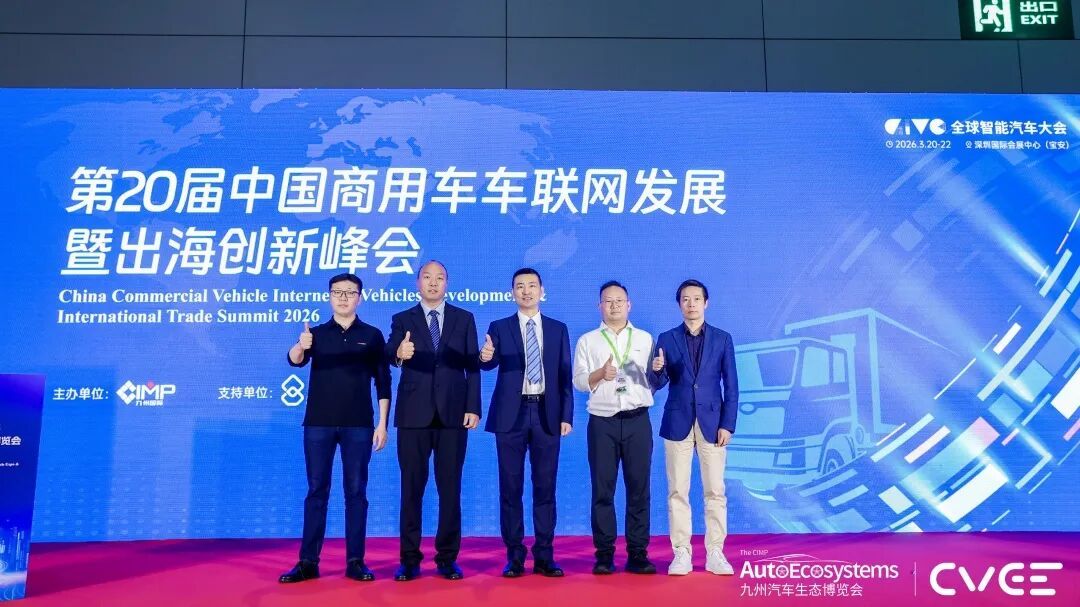
The 20th China Commercial Vehicle Telematics Development & Global Expansion Innovation Summit, organized by CIMP and supported by Shenzhen Chehulu Technology Co., Ltd., was successfully held on March 20, 2026, at Shenzhen World Exhibition & Convention Center (Bao’an).
The summit gathered authoritative industry experts, representatives of leading enterprises and cross-border sector professionals for in-depth discussions on key topics including policy and regulation, technological innovation and global market expansion, injecting new momentum into the high-quality development and internationalization of China’s commercial vehicle telematics industry.

Focusing on Industry Pain Points and Key Growth Drivers
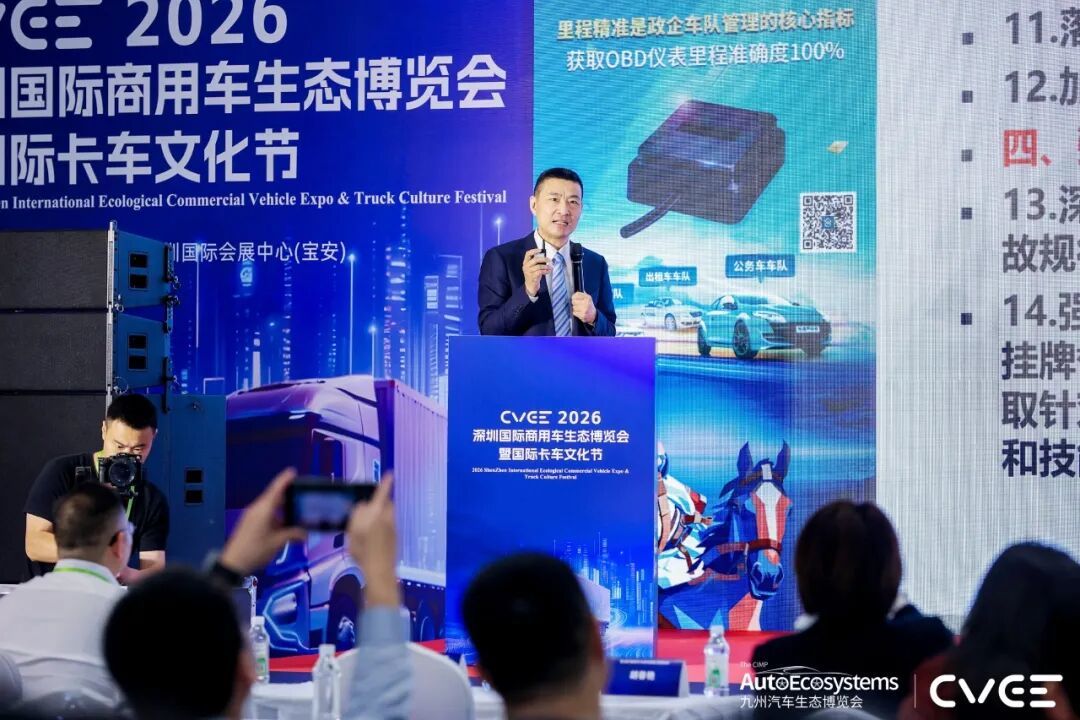
During the policy interpretation session, Xiong Yanwu, an expert from the China Academy of Transportation Sciences, provided an in-depth analysis of the development trends and practical implementation of safety supervision for “two passenger transport categories and one dangerous goods transport category”. She explained the final-stage requirements of the Three-Year Action Plan for Tackling Root Causes in Workplace Safety as they apply to safety supervision in this field, as well as the future direction of regulatory upgrades.
According to Ms. Xiong, enhancing safety supervision capabilities for these key transport vehicles will be a major priority in 2026. Key measures include upgrading the National Key Operating Vehicle Networked Monitoring and Control System and fully implementing targeted, category-based and tiered risk management. She noted that commercial vehicle safety supervision is shifting from treating symptoms to addressing root causes. As a result, regulatory responsibility must evolve from single-department oversight to a closed-loop, multi-department coordination mechanism. By applying intelligent technologies, regulators can carry out more proactive and precise supervision of road transport operators, upgrading the regulatory model to full-chain intelligent risk prevention and pre-emptive control.
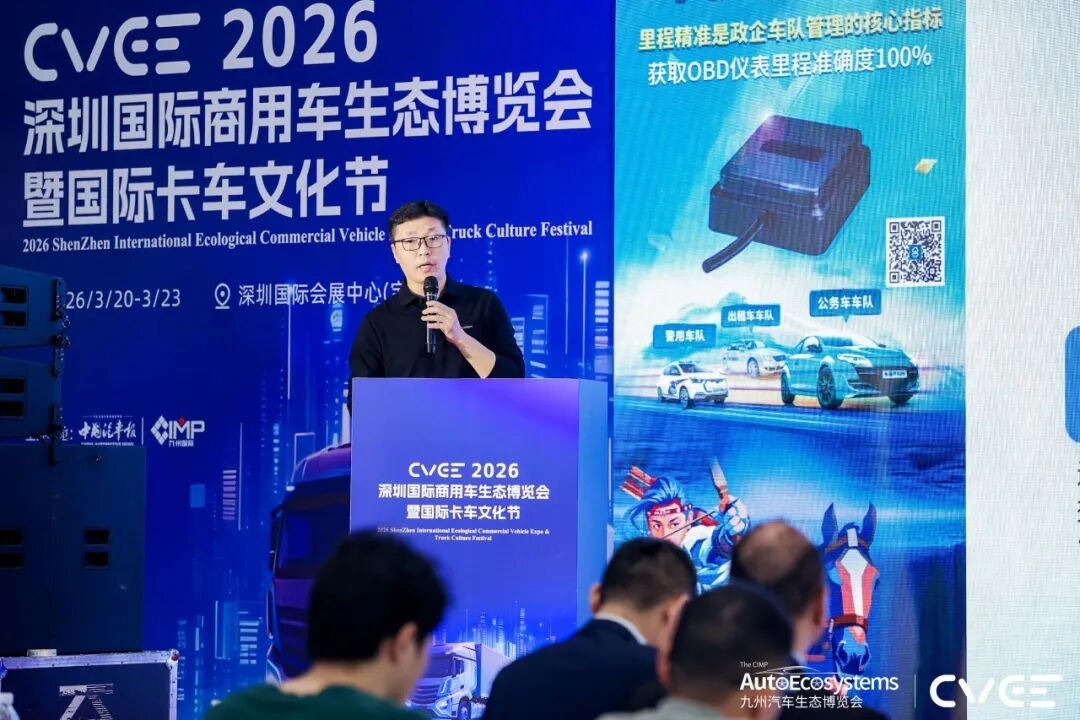
Huo Menghao, Product Director of Hangzhou Hikvision Automotive Technology Co., Ltd., focused on one of today’s most discussed topics, artificial intelligence (AI), and shared the real-world deployment results of the company’s AI-powered open platform for vehicle connectivity. His presentation explored new pathways for AI to empower the digital transformation of commercial vehicles.
Mr. Huo highlighted that Hikvision’s AI open platform is built around four core advantages: zero-barrier algorithm development, high accuracy, flexible configuration and cloud-edge collaboration. The platform enables users with no prior algorithm development experience to build intelligent solutions for specific application scenarios at lower cost and higher efficiency, accelerating the iteration, upgrading and real-world deployment of connected vehicle technologies.
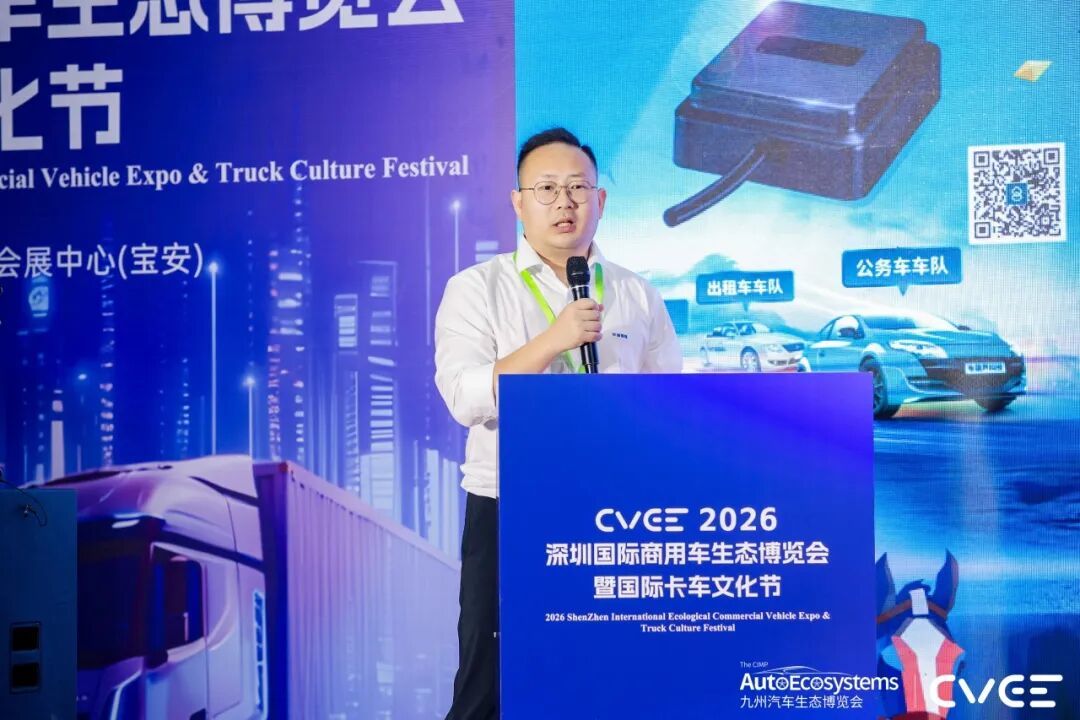
Dong Zhendong, Business Director of Wuhan Xuanyuan Intelligent Driving Technology Co., Ltd., focused on the application of infrared thermal imaging technology in the commercial vehicle sector, highlighting the safety protection value of advanced infrared sensors.
Mr. Dong noted that, by capturing thermal radiation, infrared thermal imaging can maintain effective perception in challenging conditions such as heavy fog, sandstorms and nighttime environments. It can effectively compensate for the limitations of visible-light cameras and millimeter-wave radar, significantly extending perception range and enabling earlier detection of potential hazards.
He further pointed out that far-infrared technology has already become standard equipment in many premium models from mainstream automakers and is increasingly offered as an optional feature in mid-range and entry-level models. With strong policy support for the development of intelligent connected vehicles, the integration of infrared technology into vehicles is expected to unlock significant market opportunities.
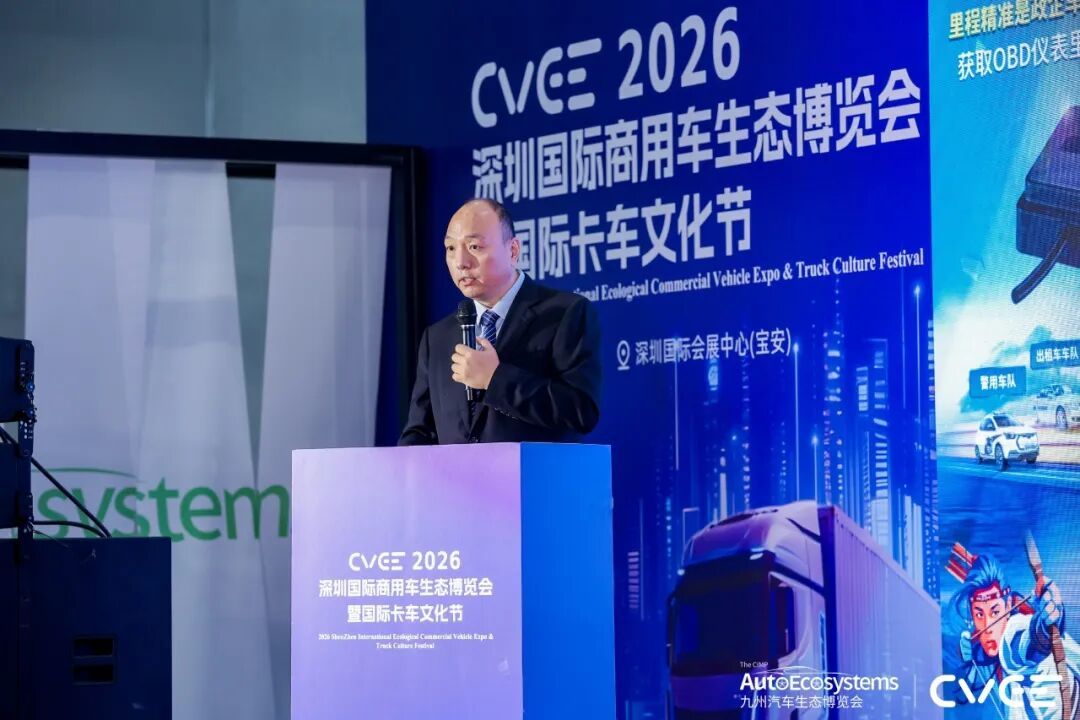
Wang Shuang, General Manager of the Innovation Business Division at Beidou Chenyu and specially appointed expert of the Logistics Enterprises Branch of the China Communications and Transportation Association, delivered a presentation titled “Beidou Tianwang: Safeguarding the Transport Industry Through Smarter Operations.” His presentation demonstrated the integrated capabilities of Beidou technology and AI-powered risk control.
According to Mr. Wang, Beidou Tianwang builds a full-process safety management closed loop through a “hardware + platform + service” model, covering risk warning, intelligent intervention, data review and continuous optimization. By deeply integrating into fleet workflows and operational scenarios, the system helps transport enterprises shift from passive monitoring to proactive risk prevention, significantly reducing operational risks and claim ratios.
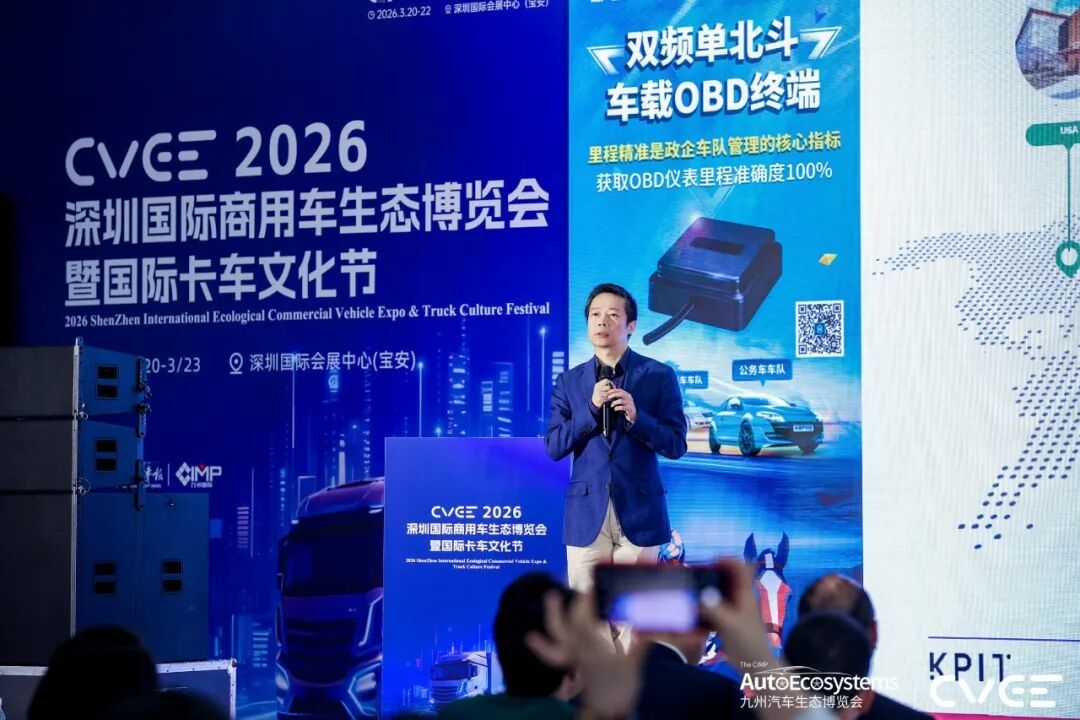
Dr. Zhang Renjie, CEO of KPIT China, analyzed the breakthrough path for Chinese commercial vehicle companies from a global perspective.
Dr. Zhang noted that the global expansion of Chinese automakers has shifted from product export to ecosystem-driven internationalization, while companies are also facing challenges such as cost-profit imbalance, data silos and lagging supply chains. To address these challenges, he suggested that Chinese automakers build a “3+1” localized operating system covering marketing, supply chain, services and digital platforms. By leveraging global resources to support localized R&D, establish compliance systems and build local partner networks, Chinese companies can strengthen their international competitiveness and effectively overcome barriers such as overseas market access and limited brand awareness.
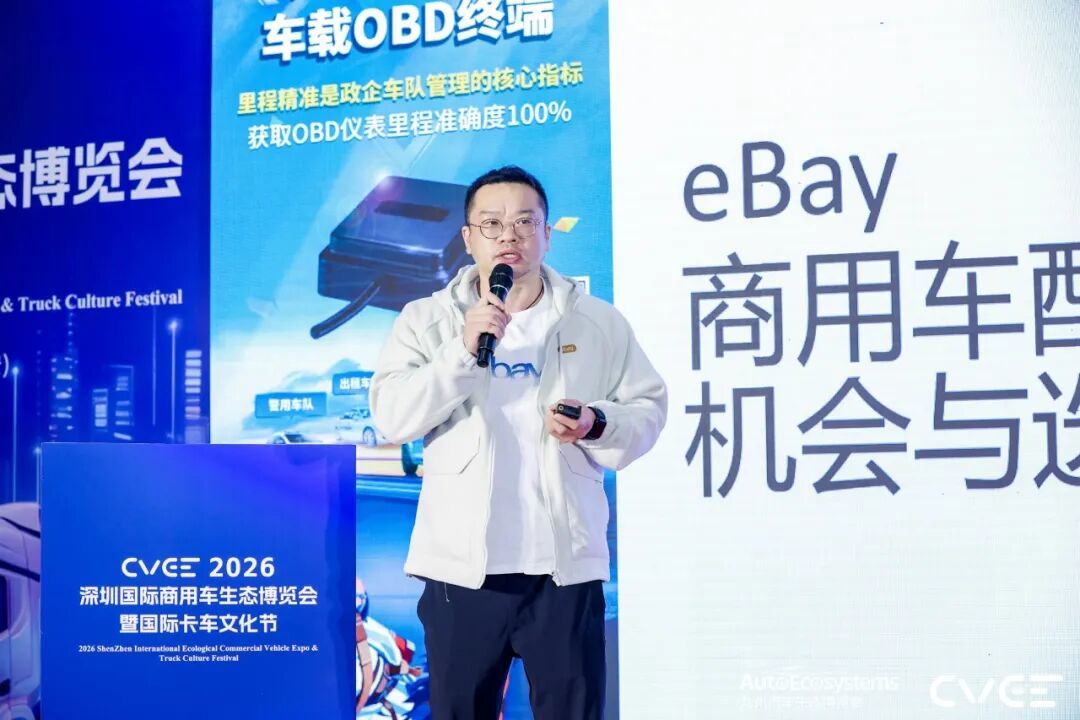
Jeff Zhao, Product Category Manager of the Cross-Border Business Department at eBay Greater China, focused on commercial vehicle parts and shared the global expansion opportunities for Chinese commercial vehicle enterprises amid the rise of cross-border e-commerce.
He noted that commercial vehicle parts have become a blue-ocean market for global expansion, offering key advantages such as high average order value, strong repeat purchase potential and relatively low competition. Categories including air filters, heavy-duty truck steering knuckles and brake components are seeing strong demand, while demand for digital procurement continues to rise.
With significant advantages in cost control and production capacity, Chinese commercial vehicle supply chain companies are well positioned to compete on cross-border e-commerce platforms. Through platforms such as eBay, they can more precisely reach core overseas buyers, including independent vehicle owners and fleet managers, and accelerate their entry into global markets.
The development path of China's commercial vehicle telematics industry is becoming increasingly clear
The China Commercial Vehicle Telematics Conference not only created a high-level exchange platform covering policy, technology and market development, but also clearly outlined the industry’s growth trajectory: building a foundation through safety and compliance, driving progress through technological innovation, and expanding through a global ecosystem strategy.
Looking ahead, as telematics technologies continue to evolve and the global expansion ecosystem becomes more mature, Chinese commercial vehicle telematics companies are expected to achieve new breakthroughs in high-quality development and global competition.

Follow US